A study finds nearly half of jobs are vulnerable to automation

posted in: IMPORTANCE OF CODING | 0

That could free people to pursue more interesting careers

A WAVE of automation anxiety has hit the West. Just try typing “Will machines…” into Google. An algorithm offers to complete the sentence with differing degrees of disquiet: “…take my job?”; “…take all jobs?”; “…replace humans?”; “…take over the world?”

Job-grabbing robots are no longer science fiction. In 2013 Carl Benedikt Frey and Michael Osborne of Oxford University used—what else?—a machine-learning algorithm to assess how easily 702 different kinds of job in America could be automated. They concluded that fully 47% could be done by machines “over the next decade or two”.

A new working paper by the OECD, a club of mostly rich countries, employs a similar approach, looking at other developed economies. Its technique differs from Mr Frey and Mr Osborne’s study by assessing the automatability of each task within a given job, based on a survey of skills in 2015. Overall, the study finds that 14% of jobs across 32 countries are highly vulnerable, defined as having at least a 70% chance of automation. A further 32% were slightly less imperilled, with a probability between 50% and 70%. At current employment rates, that puts 210m jobs at risk across the 32 countries in the study.

The pain will not be shared evenly. The study finds large variation across countries: jobs in Slovakia are twice as vulnerable as those in Norway. In general, workers in rich countries appear less at risk than those in middle-income ones. But wide gaps exist even between countries of similar wealth.

Differences in organisational structure and industry mix both play a role, but the former matters more. In South Korea, for example, 30% of jobs are in manufacturing, compared with 22% in Canada. Nonetheless, on average, Korean jobs are harder to automate than Canadian ones are. This may be because Korean employers have found better ways to combine, in the same job, and without reducing productivity, both routine tasks and social and creative ones, which computers or robots cannot do. A gloomier explanation would be “survivor bias”: the jobs that remain in Korea appear harder to automate only because Korean firms have already handed most of the easily automatable jobs to machines.

Source: The Economist
This 12-Year-Old Is Creating an App for Disabled People

posted in: IMPORTANCE OF CODING | 0

by JOE FRYER

At just 12 years old, Alexander Knoll is already handing out business cards.

Even more impressive, his title on those business cards is “CEO.”

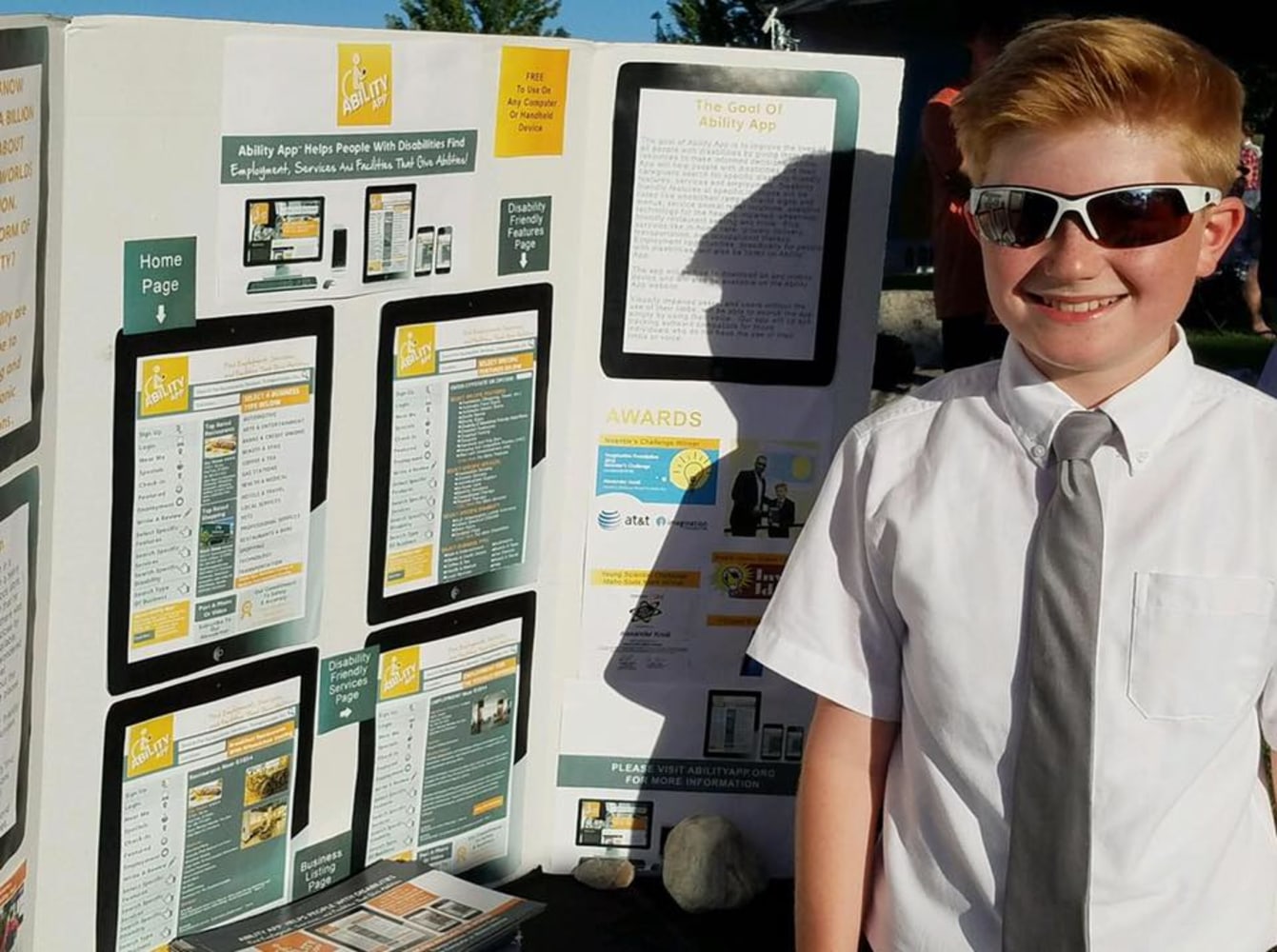
The inventive, freckle-faced redhead is creating something called the Ability App, which is like Yelp for accessibility. When it’s finished, the free application will help people with disabilities navigate public spaces by providing information about wheelchair ramps, disabled parking, braille menus and more.

This Child CEO is Helping Disabled People Navigate Public Spaces 1:48

Alex, who lives in Post Falls, Idaho, came up with the idea a couple years ago after seeing a man in a wheelchair struggle to open a heavy door.

“So I wondered if there’s an app or a website that could’ve told him what stores around the area had automatic doors,” Alex told NBC News.

Alexander Knoll gives a presentation on the the Ability App. Ability App Facebook

His idea is now getting national attention. Alex appeared last week on Ellen DeGeneres’ show, breaking down in tears when he met his hero.

DeGeneres surprised him with a check from Shutterfly for $25,000. Alex hopes the money will help him finish the app.

“I’m going to work as hard as I can, as fast as I can to get it done and get it out to the people,” he said.

The need is great, according to Tara Miller. She was paralyzed 17 years ago when her neighbor accidentally shot a .357 magnum through the wall while she was sleeping.

Miller said it can be hard to find accessible businesses — like restaurants with low tables and wheelchair-friendly restrooms. She is now helping Alex by offering her expertise.

“I think it’s really great,” Miller said about the boy’s app. “There’s a lot of places that I don’t go because I don’t know if it’s going to be accessible or not.”

Alexander Knoll Ability App Facebook

Alex’s parents like to say their son is wise beyond his years.

“You hear people say the term ‘old soul,’” said Brian Knoll, Alex’s father. “And I think Alex is a great case of an old soul.”

His mother, Anne, agrees.

“He puts other people first, and I always get choked up when I think about it.”